How to weigh something without a scale
No scale at hand? You can still find out how heavy something is. Below are seven methods, from the quickest (a photo with your phone) to classic tricks with coins, water and measuring spoons. Each one includes when to use it and how accurate it is.
1. Take a photo with a scale app (fastest)
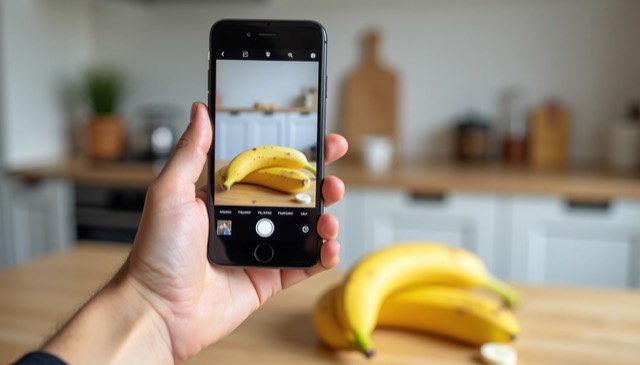
A camera-based app like Scale For Grams estimates weight from a single photo. Put the item on a table, add a size reference such as a coin or your hand, and take the picture. You get an estimate in grams or ounces within seconds. It is the easiest option for food, jewelry, spices and everyday objects.
2. Use coins as reference weights
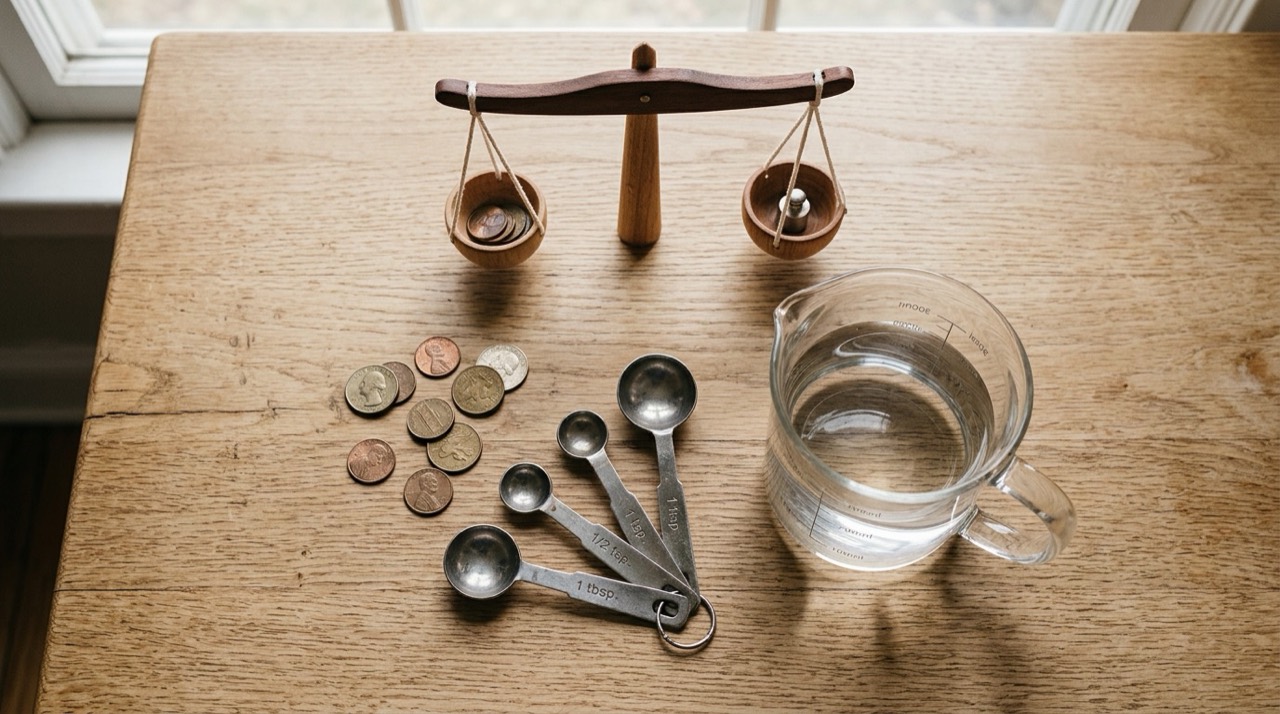
Coins are made to precise weights, so you can use them as counterweights on a simple balance (method 4).
| Coin | Weight |
|---|---|
| US penny (since 1982) | 2.5 g |
| US nickel | 5.0 g |
| US dime | 2.268 g |
| US quarter | 5.67 g |
| 1 euro cent | 2.30 g |
| 10 euro cent | 4.10 g |
| 50 euro cent | 7.80 g |
| 1 euro | 7.50 g |
| 2 euro | 8.50 g |
3. Use water: 1 ml weighs 1 g
One milliliter of water weighs one gram. If you have a measuring jug, you can measure out an exact weight of water, which is useful as a counterweight. A full 500 ml bottle of water weighs about 500 g plus the bottle.
4. Build a simple balance
Hang a coat hanger from a door handle, or balance a ruler on a pencil. Attach two identical cups or bags, one at each end. Put the item in one and add coins or water to the other until the two sides are level. The total of the reference weights equals the weight of your item.
5. Measure food with spoons and cups
For cooking, volume is often good enough. Typical values (level spoons):
| Ingredient | 1 tablespoon (15 ml) | 1 teaspoon (5 ml) |
|---|---|---|
| Water | 15 g | 5 g |
| Sugar | 12–13 g | 4 g |
| Flour | 8 g | 3 g |
| Salt | 18 g | 6 g |
| Butter | 14 g | 5 g |
| Honey | 21 g | 7 g |
Values vary with how loosely the spoon is filled.
6. Estimate with your hand
Nutrition coaches use hand portions: a palm-sized piece of cooked meat or fish is roughly 85–115 g, a fist of cooked rice or pasta is roughly one cup, and a thumb-sized piece of butter or peanut butter is roughly one tablespoon. It is rough, but always with you.
7. Use paper for letters
A standard sheet of office paper (A4, 80 g/m²) weighs about 5 g and a typical envelope about 5 g, so you can count sheets to estimate a letter's weight before buying postage.